2.1 UK Energy And Networking Infrastructure

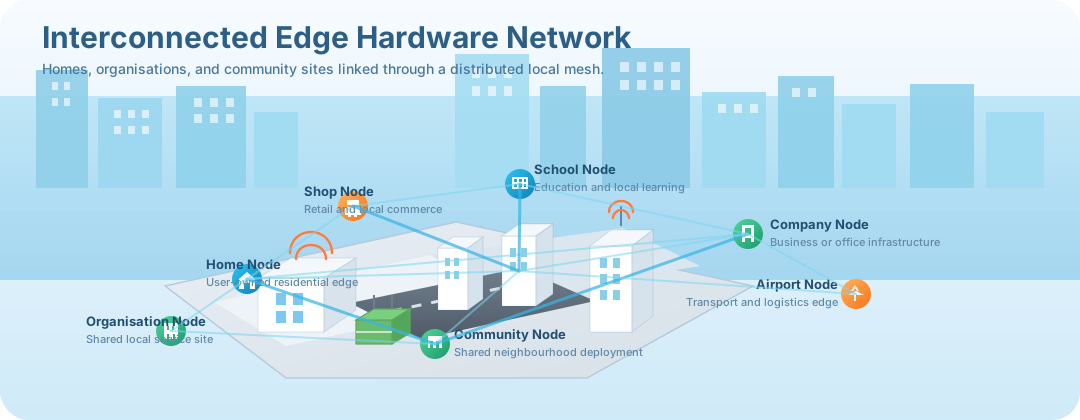
This layer grounds the whole system in the physical infrastructure the UK already operates: the electricity grid, local distribution networks, home and commercial connections, fibre and mobile telecoms, exchanges, towers, routers, and the wider public and private networks that allow distributed compute to function reliably. Without that foundation, edge hardware and orchestration software would have no resilient path to power, coordination, or external communication.
It should therefore be understood as more than energy pricing alone. The model depends on a close coupling between electrical infrastructure and communications infrastructure, including smart meters, flexible tariffs, local substations, home energy systems, broadband backhaul, Wi-Fi, Ethernet, 4G, 5G, and other networking layers that connect households, communities, public services, and businesses into a usable national platform.
In practical terms, this layer allows compute activity to respond to real-world supply and network conditions. Nodes should be able to increase activity when electricity is cheaper, cleaner, or locally abundant, reduce non-urgent workloads when the grid is under pressure, and route services according to available bandwidth, latency, and resilience needs. That creates a direct link between AI compute, modern grid-flex models, and national connectivity infrastructure, making the platform better aligned with UK energy strategy, telecom capability, and public-interest resilience.